

A featured contribution from Leadership Perspectives: a curated forum reserved for leaders nominated by our subscribers and vetted by the Construction Tech Review Advisory Board.

Manulife
Stay business relevant in the long term with continuous learning of new skills and technologies
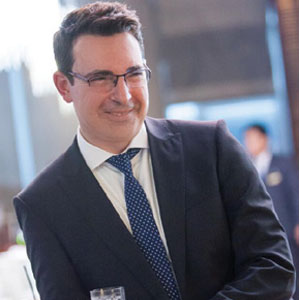
Jason Little
Starting with Kodak in 1989, the 1990’s saw a wave of offshoring (particularly to India) following the advances in affordable communications and the rise of the internet. These services primarily included: back-office and transactional administrative functions, finance, HR, contact centers, IT infrastructure and application development services.
Over the last 25 years, this landscape has both evolved and matured significantly.
Increasing amounts of both the IT and business value chain began shifting from transactional processes and commodity skills to knowledge workers and specialist skills. In the technology arena, we have seen it evolve from outsourcing of legacy support and expense management to enabling new digital skills to fuel growth and drive innovation within the organization.
We have seen an expanded global sourcing footprint to additional low cost and high talent locations. For example off-shoring to China, Philippines, Vietnam and other Southeast Asia markets. And near-shoring to Eastern Europe and Central America.
The terminology and models of managed services, outsourcing and offshoring have also evolved. Many large corporations looking to capitalize on the scale and labor arbitrage benefits have either partnered to form or established their own internal Global Outsourcing and Delivery Centers.
So what didn’t work so well and what did we learn from it?
Organizations that chose to just lift and drop their current processes to offshore or managed services without transforming their business models have achieved labor arbitrage savings but have struggled with the scale economies, which would have otherwise allowed them to enter emerging markets. Where offshore teams act as merely an extension of the onshore teams, this maintains organization silos. When the work is purely transactional in nature, staff do not have the opportunity to influence a better customer outcome nor career growth opportunities. This inevitably leads to engagement and attrition issues.
Whether it is an internally or externally managed service it is always critical to attain and attract top talent
In other instances, organizations have treated the managed service as a black box or set-and-forget initiative. Neither appreciated perhaps the additional complexity or communication required. Perhaps at the time there was a focus on cost without an appreciation of the impact on quality. Perhaps the relationship has turned toxic.
Your choice to either (a) build a managed service within your organization, (b) utilizing a hybrid partner model or (c) a completely outsourced service is really determined by how much management control vs risk you wish to retain or transfer. Regardless of the model you chose there are common considerations for ensuring success.
Form long term strategic relationships and leverage partners to gain access to the latest insights, technology and practices. There are many organizations that have been doing this well for many years, don’t be afraid to talk to one or more of their experts.
Whether it is an internally or externally managed service it is always critical to attain and attract top talent. The service cannot be seen as a dead end for talent. It always comes back to people. People need to have clear career paths. Additionally, the service organization needs to invest in continuous learning of new skills and technologies to remain business-relevant in the mid-term.
The service cannot be an island. It must have a strong sense of purpose in terms of the business outcomes it is providing linked to the organization’s business strategy. Ideally the corporate culture is strongly pervasive and the C-suite sends strong messages on the importance of the service supported by regular executive and customer visits.
Put regular governance in place for service performance. Whether they are KPIs or more formal SLAs, be clear on what the shared outcome is. Life is not perfect, issues will happen. It is more important to learn from the bumps along the way than focus on penalties. This involves embedding a culture that actively demonstrates innovation, design thinking and continuous improvement into the service.
Lastly, put some deep thought into your location strategy. While many locations are quite mature you need to balance several considerations including cost competiveness, availability of talent and mobilization duration, time zone compatibility, language skills, cultural compatibility and local government support.
Earlier this year we announced the launch of our new Manulife IT Delivery Center (MITDC), a new company in the Philippines created to deliver digital solutions and harness the efficient use of technology to provide faster and better service to our Manulife customers across Asia. Our vision for the MITDC is to function internally as a leading edge software house. We have established a strong service framework, governance and clear agile delivery, quality and resourcing KPIs to achieve this.
While Manulife maintains ultimate management control of this service and has hired a large Manulife new tech team to support our digital initiatives, we also recognized that to meet our aggressive digital transformation agenda in Asia we needed to partner for skills. I am pleased to say that we have formed strong strategic relationships with both Accenture in Manila and DXC in Vietnam for our engineering needs. While things may not always go exactly to plan, across all three organizations we have shared goals and KPIs, so collectively we learn and take decisive corrective actions. So far so good, in 2018 we saw releases of our new agent POS, lead management, customer websites and claims solutions into several Asia markets. With more to come in 2019 I’m proud to say the MITDC is contributing to making our Manulife Asia customers’ decisions easier and lives better.
